Its history is unknown, as is the case with many other medieval bridges, the first reference to it being found in the work of Pascual Madoz, in the nineteenth century, going unnoticed in previous dictionaries.

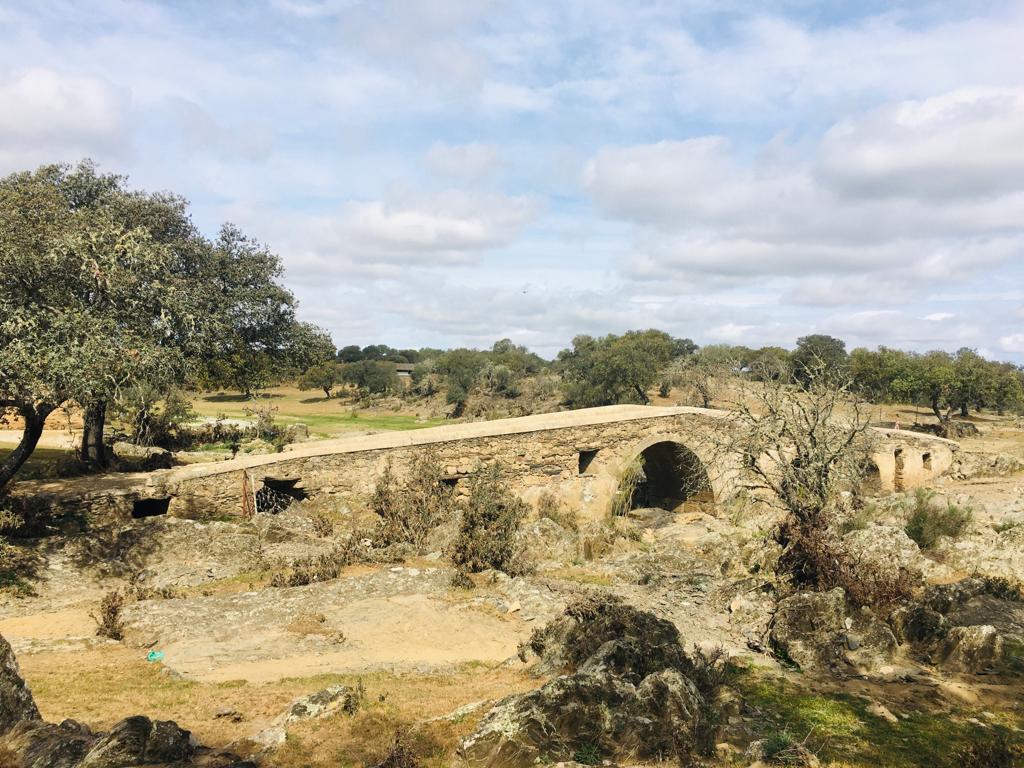
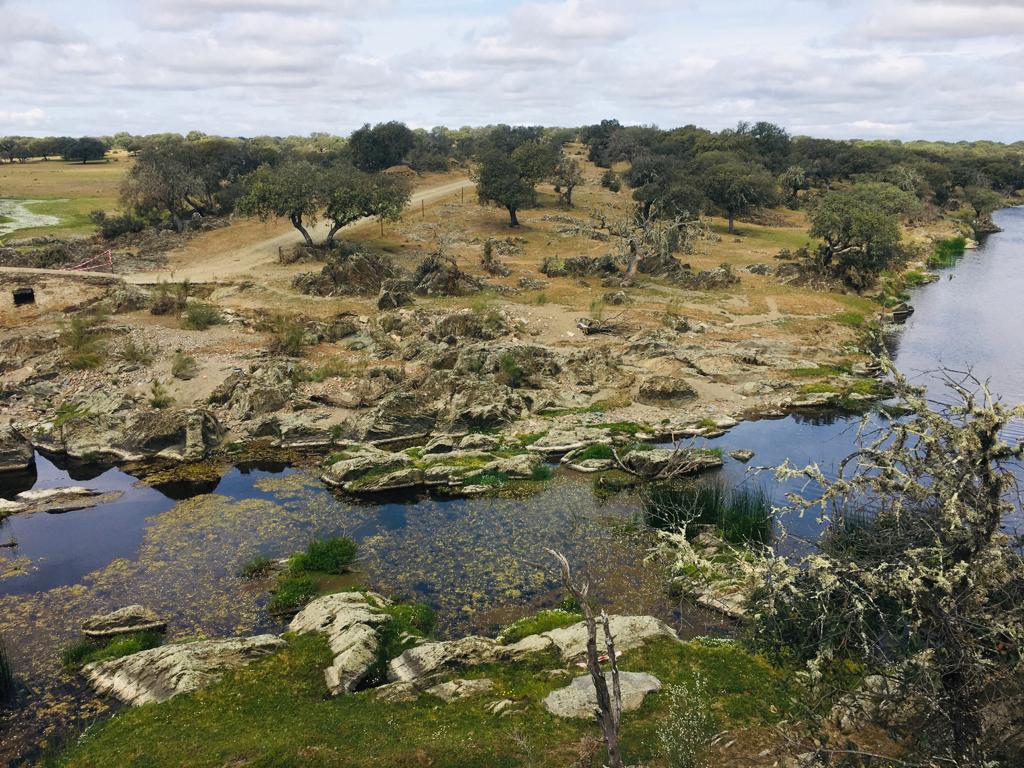
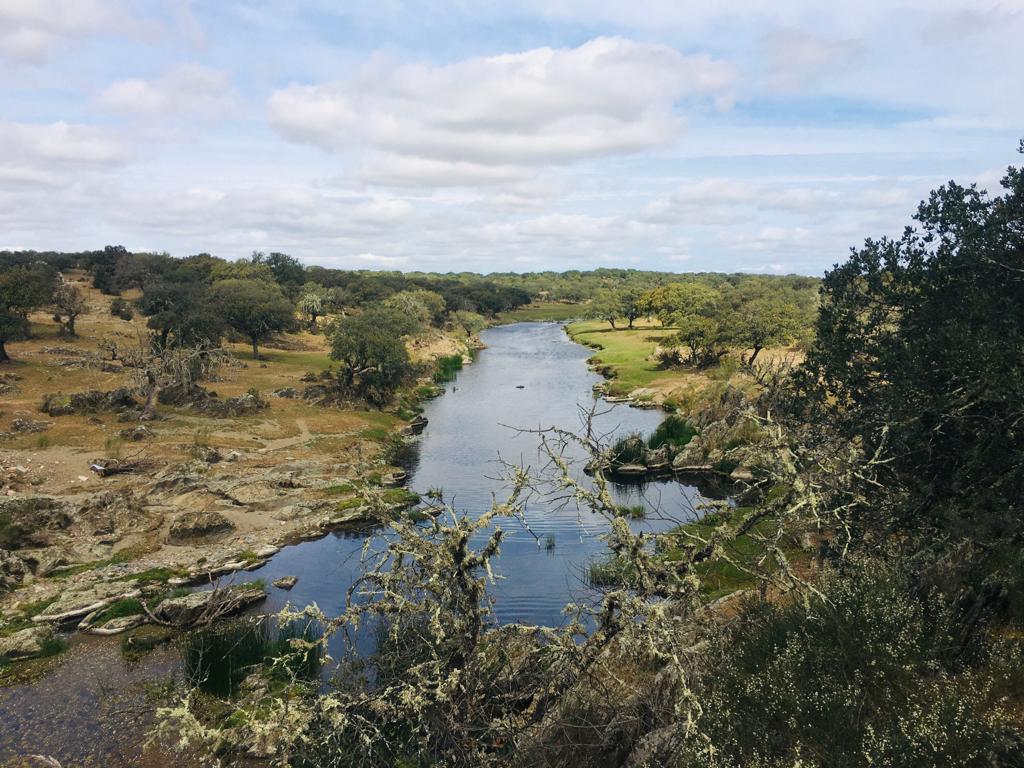
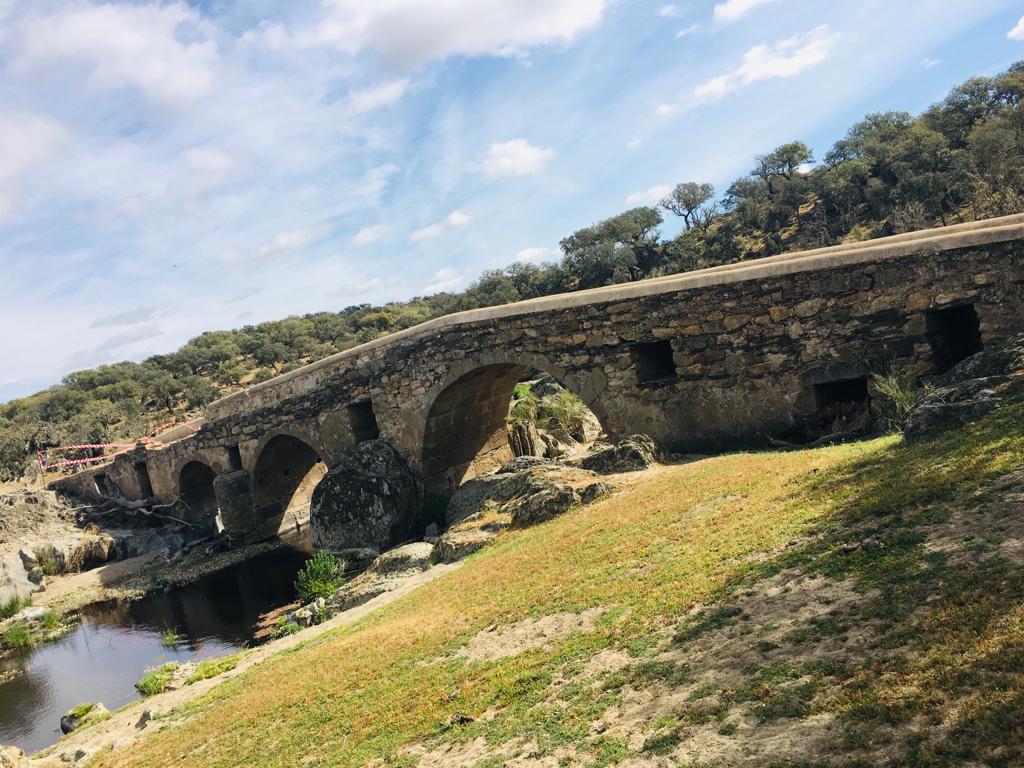
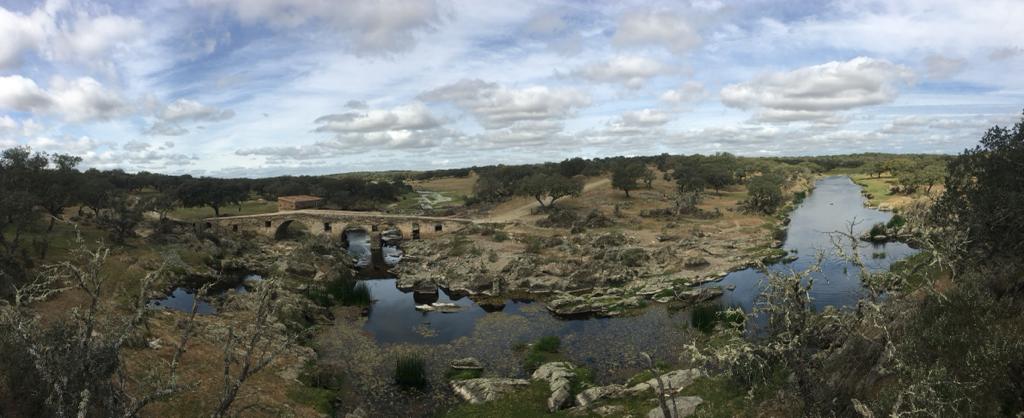
In this case, the fact that it was not mentioned in the Interrogatorios del Catastro de la Ensenada (October 25, 1751) [15] or of the Real Audiencia de Extremadura in 1791 does not imply that it did not exist years before, judging by the factory that it presents. This bridge, as we will see, has some constructive similarities with the bridge over the Tamuja River on the Camino Viejo de Cáceres.
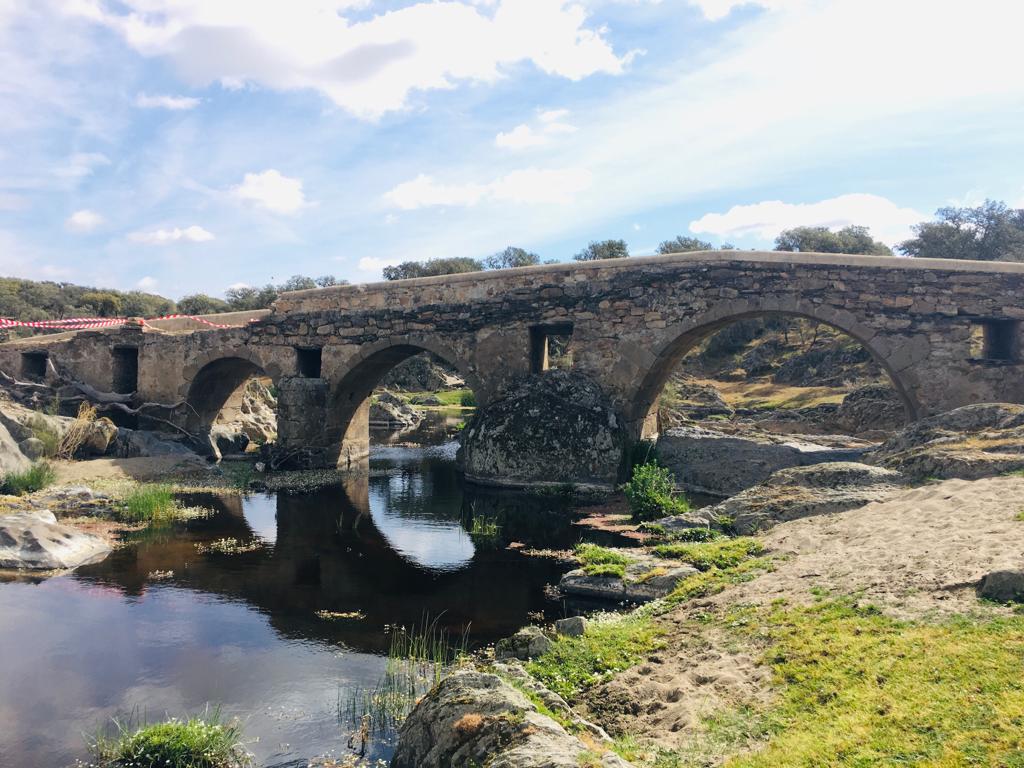
The granite pieces of its arches show characteristic stonemason’s marks, and similar marks have not been found in any other bridge. They were certainly built on the ashlars at the foot of the riverbed, coming from a primitive bridge ruined after the great flood that it must have suffered, like other bridges over the same river.
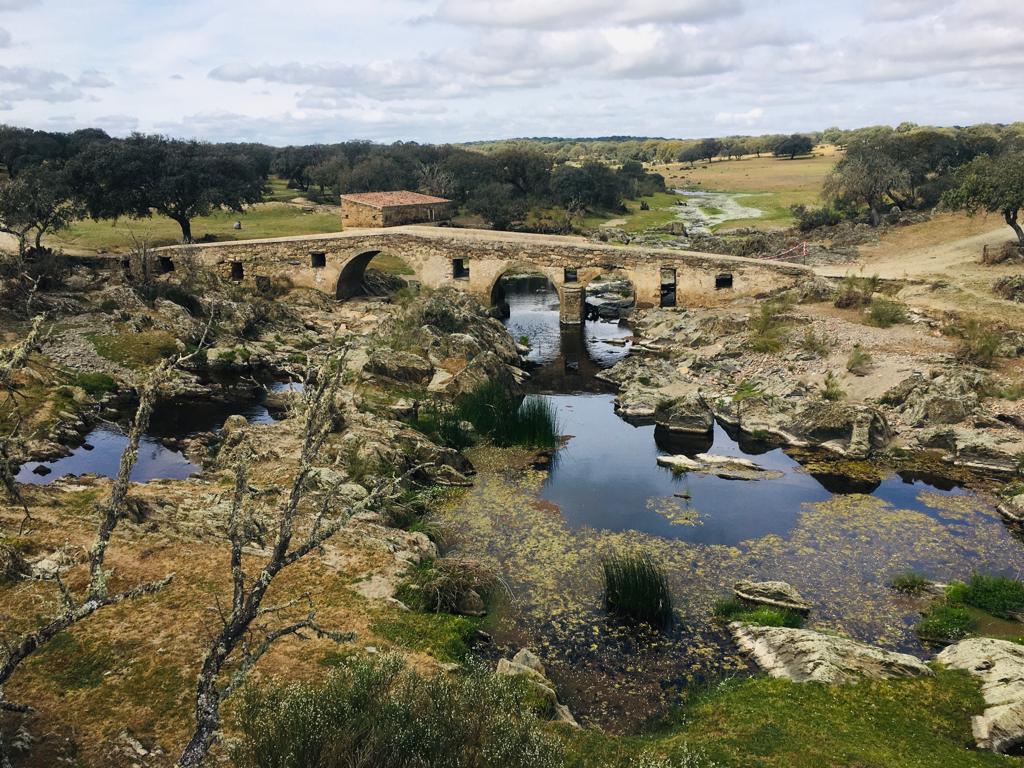
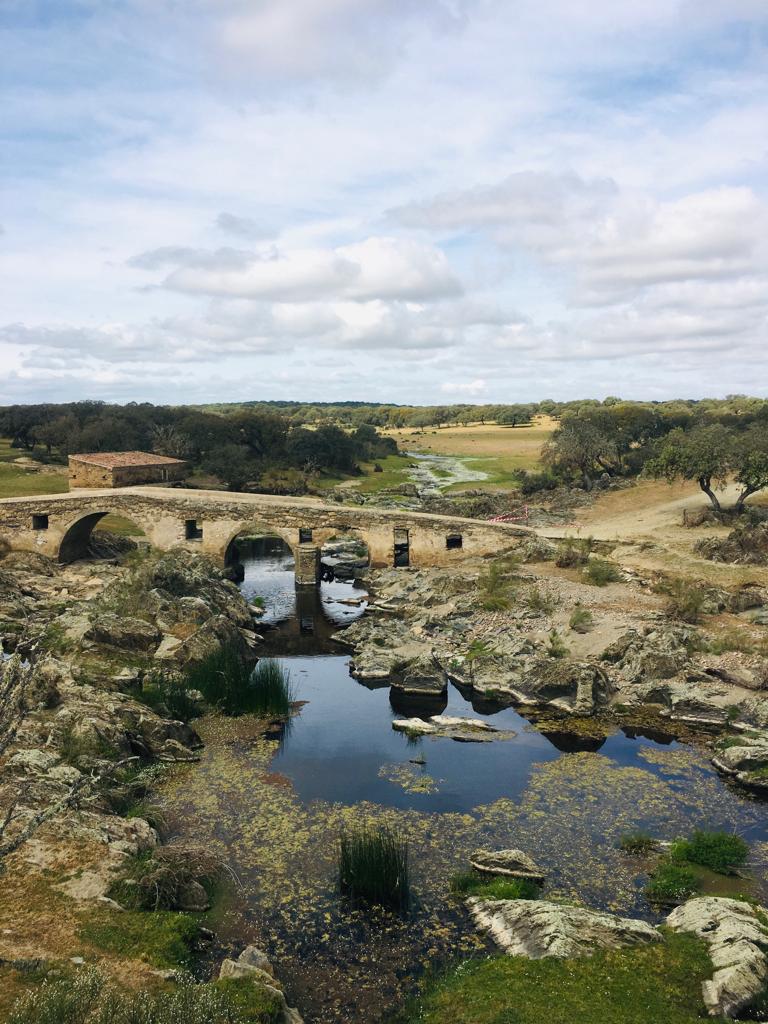
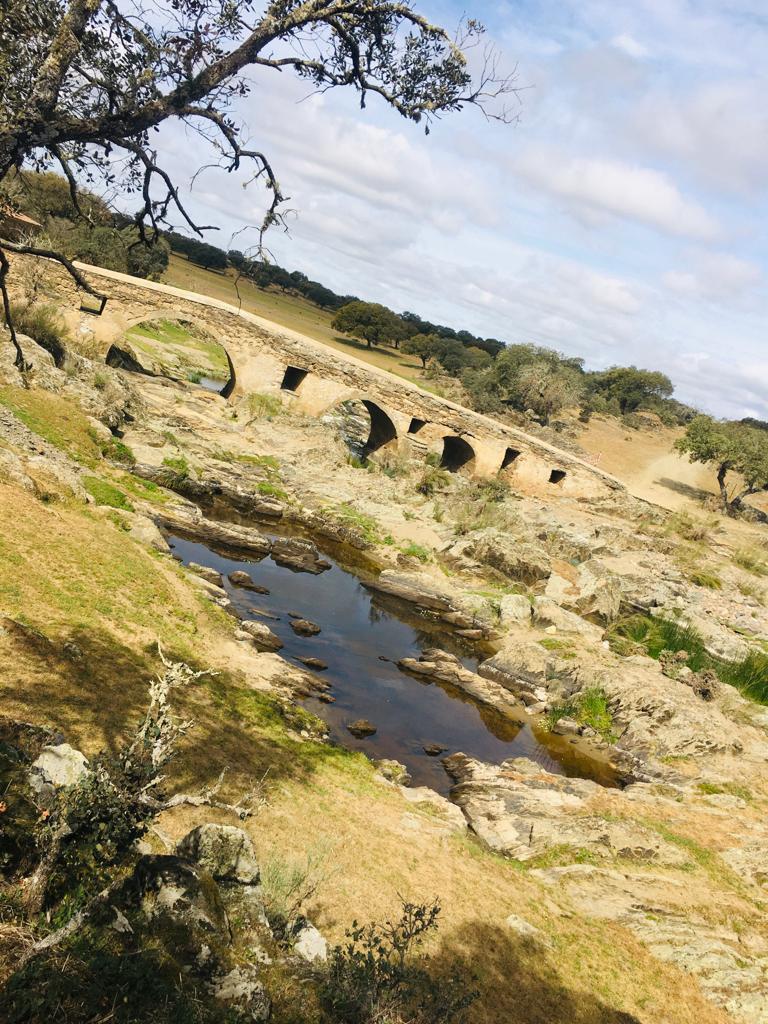
In addition to being previously marked and repositioned, they have broken and worn corners, which shows that they were dragged and hit each other after the ruin of the bridge. The work has three arches made of granite masonry, of different diameters, the largest arch being located on the right bank of the river.
After the great flood, the bridge was completely rebuilt, almost doubling its original length and increasing the height of its roadway. This reconstruction is made of slate masonry, except for the arches, cutwaters and abutments, which retain the original pieces.
In addition, a total of nine spillways have been added. As flood defenses, the bridge has a single triangular cutwater on the upstream side, protecting the central pilaster of the two smaller diameter arches. On the downstream side, on the same pilaster, there is a robust buttress, both elements built in granite ashlar.
The longitudinal profile of the bridge is curved, and the roadway over it has been paved with modern concrete. The parapets, made of slate masonry, are in a good state of preservation.
Judging from the construction of the foundations of this bridge, comparing its construction and architecture with the Puente del Camino Viejo de Cáceres, both works were executed in the 16th century. On the other hand, the reconstruction after the great flood that destroyed it is estimated at the end of the sixteenth century, beginning of the seventeenth century.
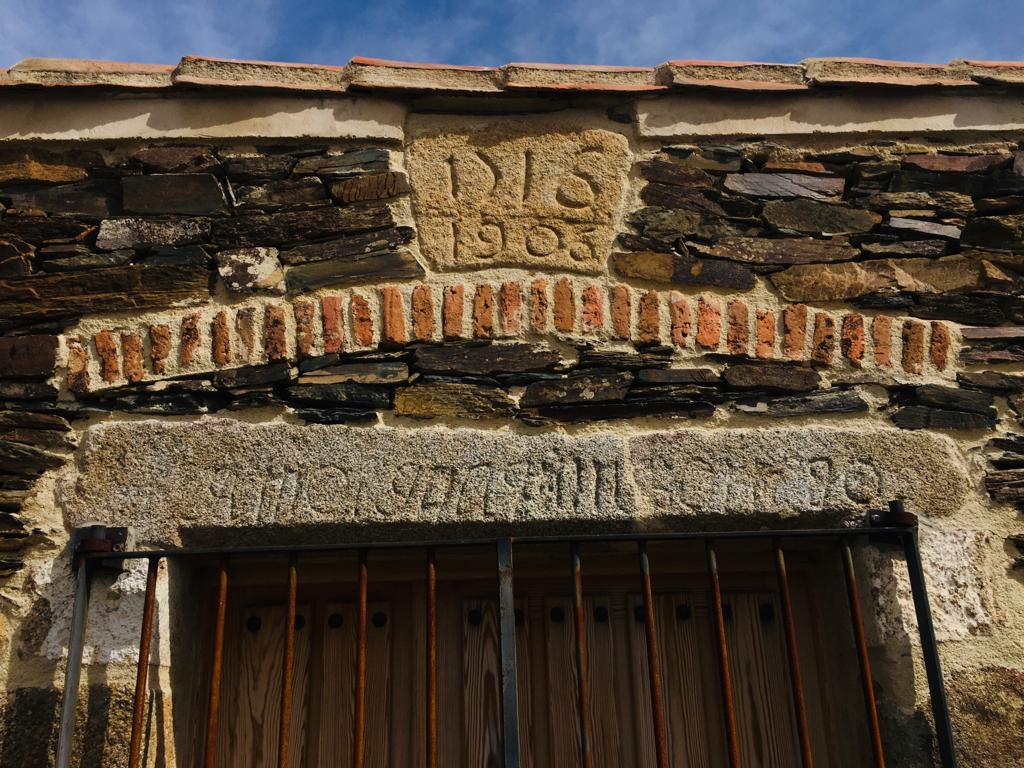
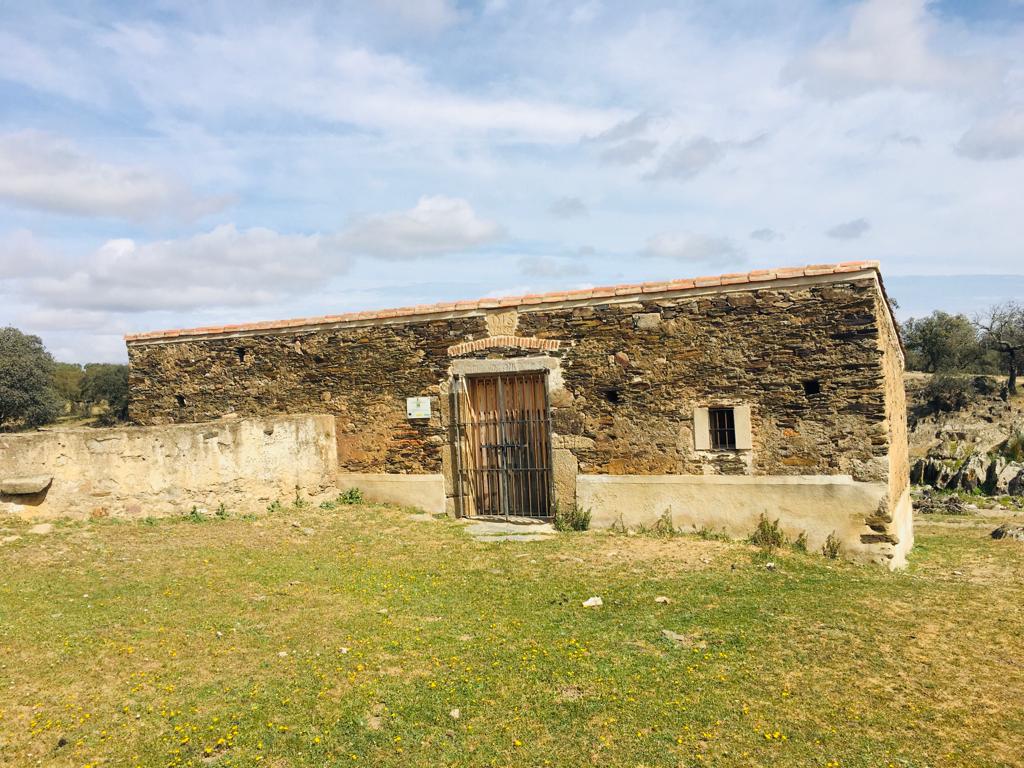
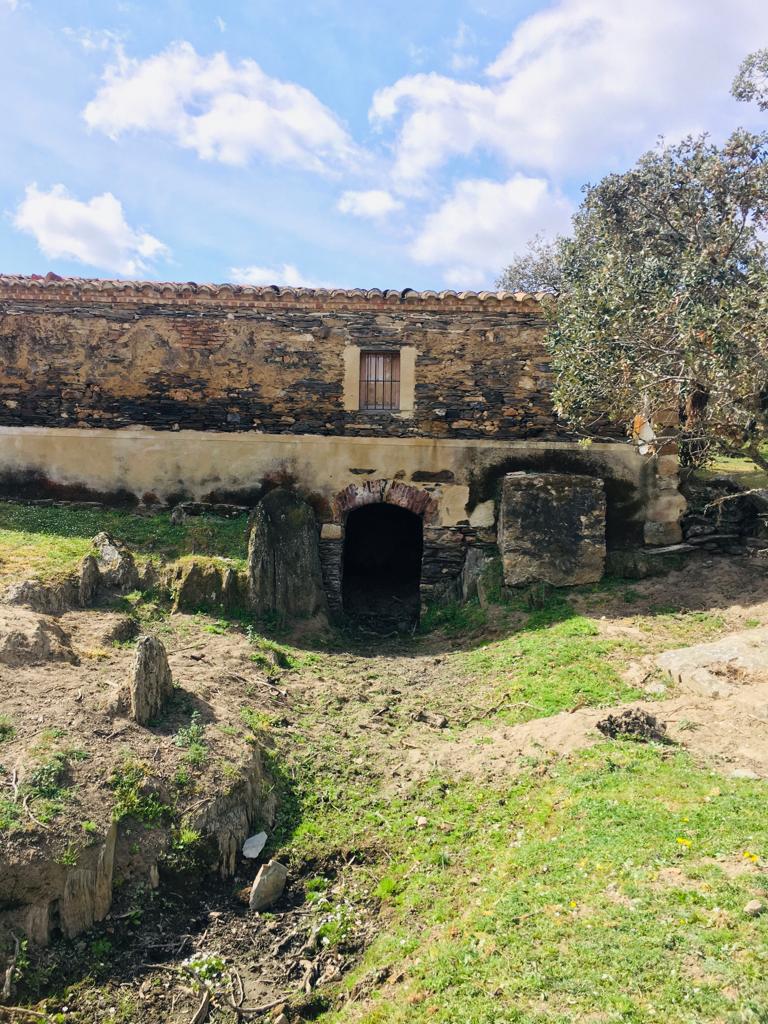
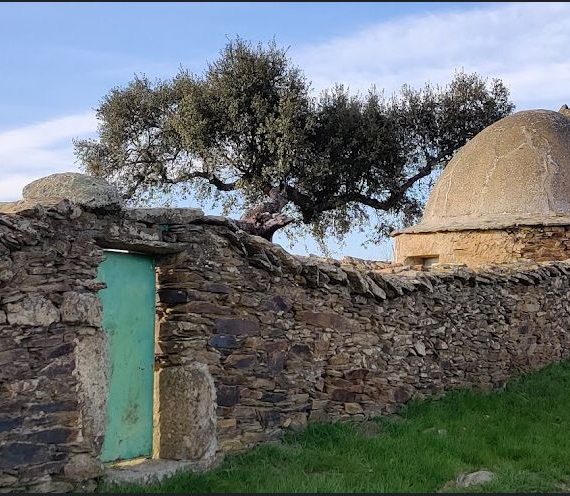
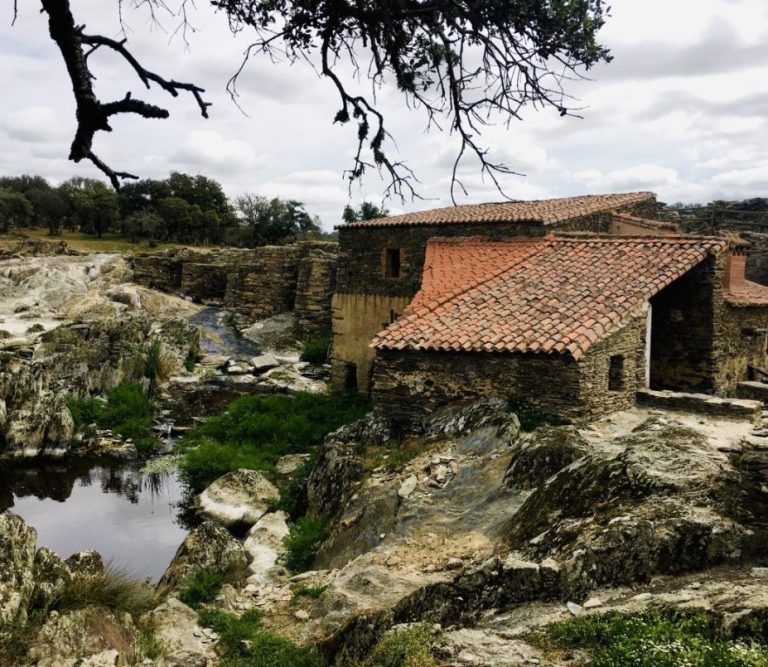
A few meters away we find a mill that was used to grind wheat and make flour with the power of water. On the door there are inscriptions that are difficult to decipher, there are also several crosses on the door jambs and a date at the top: 1905. The entire canal that brought the water to the building can be seen very well.
Este sitio web utiliza cookies para mejorar su experiencia mientras navega por el sitio web. De estas, las cookies que se clasifican como necesarias se almacenan en su navegador, ya que son esenciales para el funcionamiento de las funcionalidades básicas del sitio web. También utilizamos cookies de terceros que nos ayudan a analizar y comprender cómo utiliza este sitio web. Estas cookies se almacenarán en su navegador solo con su consentimiento. También tiene la opción de rechazar estas cookies. Pero la exclusión voluntaria de algunas de estas cookies puede afectar su experiencia de navegación.| Cookie | Duration | Description |
|---|---|---|
| cookielawinfo-checkbox-analytics | 11 months | This cookie is set by GDPR Cookie Consent plugin. The cookie is used to store the user consent for the cookies in the category "Analytics". |
| cookielawinfo-checkbox-functional | 11 months | The cookie is set by GDPR cookie consent to record the user consent for the cookies in the category "Functional". |
| cookielawinfo-checkbox-necessary | 11 months | This cookie is set by GDPR Cookie Consent plugin. The cookies is used to store the user consent for the cookies in the category "Necessary". |
| cookielawinfo-checkbox-others | 11 months | This cookie is set by GDPR Cookie Consent plugin. The cookie is used to store the user consent for the cookies in the category "Other. |
| cookielawinfo-checkbox-performance | 11 months | This cookie is set by GDPR Cookie Consent plugin. The cookie is used to store the user consent for the cookies in the category "Performance". |
| cookielawinfo-checkbox-performance | Set by the GDPR Cookie Consent plugin to record the user consent for the cookies in the "Performance" category. | |
| CookieLawInfoConsent | Records the default button state of the corresponding category & the status of CCPA. It works only in coordination with the primary cookie. | |
| elementor | This cookie is used by the website's WordPress theme. It allows the website owner to implement or change the website's content in real-time. | |
| viewed_cookie_policy | 11 months | The cookie is set by the GDPR Cookie Consent plugin and is used to store whether or not user has consented to the use of cookies. It does not store any personal data. |
| Cookie | Duration | Description |
|---|---|---|
| _ga | The _ga cookie, installed by Google Analytics, calculates visitor, session and campaign data and also keeps track of site usage for the site's analytics report. The cookie stores information anonymously and assigns a randomly generated number to recognize unique visitors. | |
| _ga_3JH8W21W66 | This cookie is installed by Google Analytics. | |
| CONSENT | YouTube sets this cookie via embedded youtube-videos and registers anonymous statistical data. |
| Cookie | Duration | Description |
|---|---|---|
| VISITOR_INFO1_LIVE | A cookie set by YouTube to measure bandwidth that determines whether the user gets the new or old player interface. | |
| YSC | YSC cookie is set by Youtube and is used to track the views of embedded videos on Youtube pages. | |
| yt-remote-connected-devices | YouTube sets this cookie to store the video preferences of the user using embedded YouTube video. | |
| yt-remote-device-id | YouTube sets this cookie to store the video preferences of the user using embedded YouTube video. | |
| yt.innertube::nextId | This cookie, set by YouTube, registers a unique ID to store data on what videos from YouTube the user has viewed. | |
| yt.innertube::requests | This cookie, set by YouTube, registers a unique ID to store data on what videos from YouTube the user has viewed. |
| Cookie | Duration | Description |
|---|---|---|
| cookielawinfo-checkbox-imprescindibles | No description | |
| wp-wpml_current_language | No description available. |